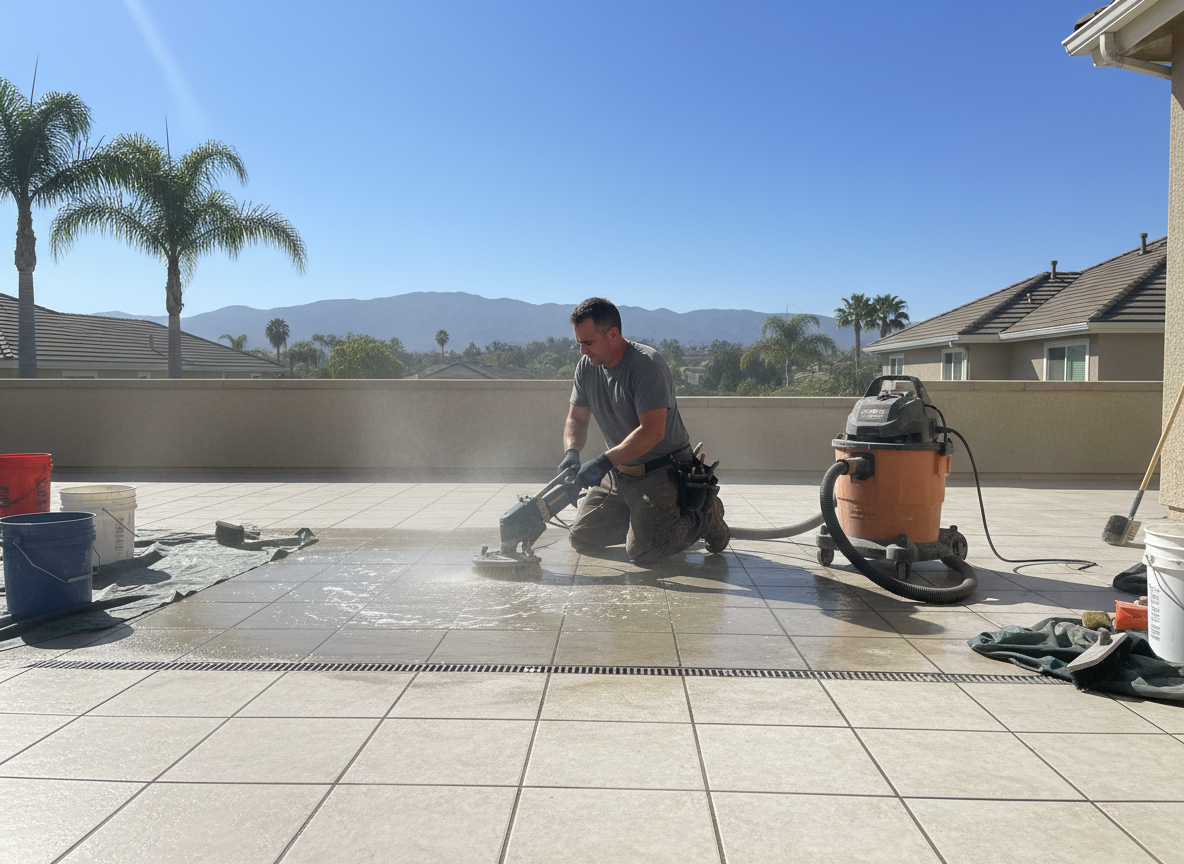
Water intrusion in East Irvine homes often reaches the subfloor beneath tile installations common in 1980s and 1990s tract housing. When moisture lingers under ceramic or porcelain tiles, grout lines discolor and soften while the thinset bond weakens, allowing movement that cracks tiles over time. Technicians must first confirm the leak source, then extract trapped water before any surface work begins, or the restored grout will fail within months.
Porous grout in bathrooms and laundry rooms absorbs standing water quickly during pipe leaks or appliance overflows typical in Orange County properties. Removing the affected grout requires diamond blades and dust extraction to avoid spreading silica into living spaces. New grout is then selected to match the existing color and density so the floor performs the same under foot traffic and daily cleaning routines.
Moisture Mapping Before Grout Work
Technicians use moisture meters on the concrete slab and adjacent drywall to locate hidden saturation that standard visual checks miss. In East Irvine homes built on compacted fill, water can travel laterally under tile for several feet, requiring targeted drying before grout replacement to prevent recurring mold.
Grout Selection for Local Conditions
High-humidity summers combined with occasional winter rains mean choosing a cementitious or epoxy grout with low porosity. Epoxy options resist staining from hard water minerals common in the local supply but cost more and require precise mixing on site.
Technician insight
In East Irvine, the thing that catches most people out with Tile and Grout Restoration is water that has wicked sideways under the slab from a neighbor's yard irrigation or a shared wall leak; homeowners focus on the visible stain while the real saturation sits two feet away in the thinset.
Bathroom Floor After Upstairs Leak
A slow supply-line drip on the second floor reached the first-floor tile in an East Irvine townhome. Meters showed elevated moisture extending under the hallway. Crews dried the slab for 48 hours, removed the saturated grout, and reinstalled matching sanded grout with sealer. The floor stayed dry through the next rain cycle.
How it works
- 1
Inspection and Moisture Assessment
Technicians locate the water source and map moisture levels in the slab and surrounding materials using meters.
- 2
Water Extraction and Drying
Standing water is removed and air movers plus dehumidifiers are placed to bring moisture content to acceptable levels.
- 3
Grout Removal and Surface Prep
Damaged grout is cut out, tiles are cleaned, and any loose thinset is addressed before new material is applied.
- 4
New Grout Installation and Sealing
Fresh grout is installed, allowed to cure, then sealed to match surrounding floors and resist future moisture.
Pricing
Pricing depends on square footage, tile condition, and whether subfloor drying is required before grout work.