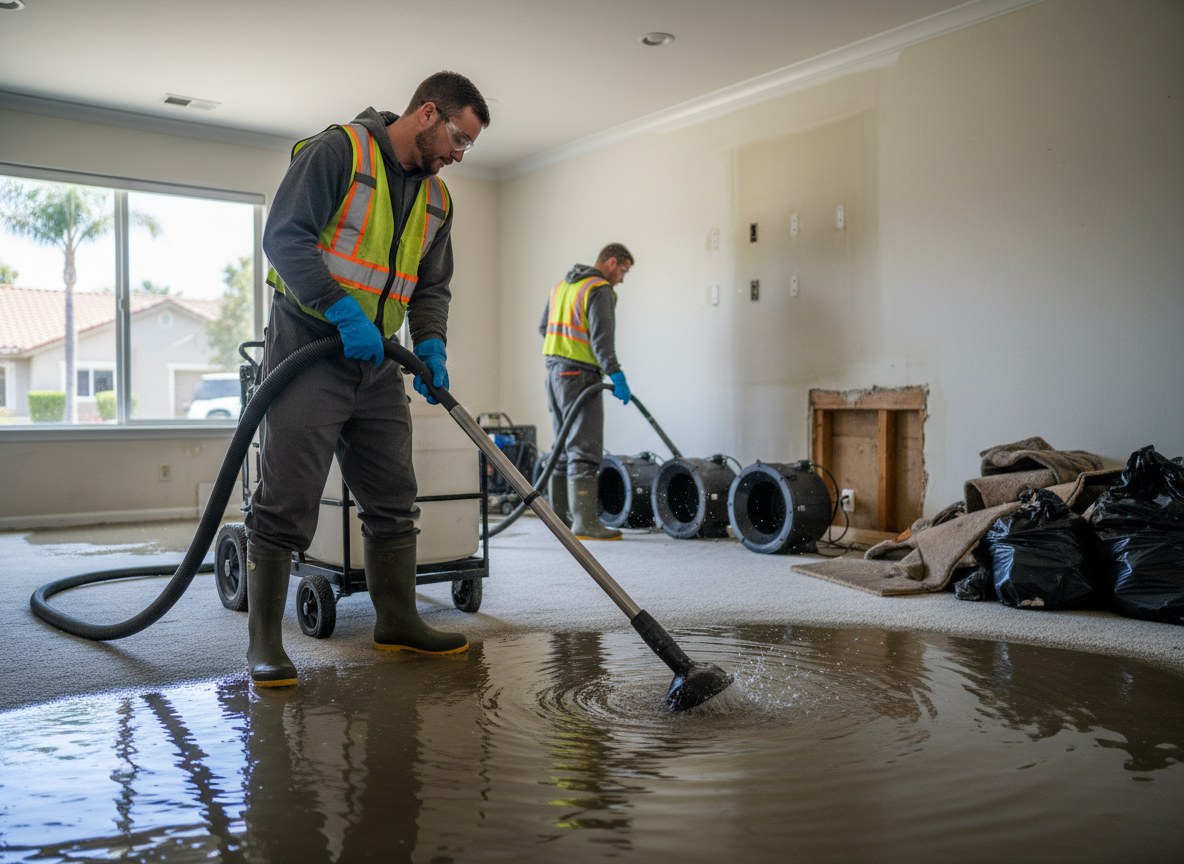
Emergency Water Extraction begins with locating the source and removing standing water before it migrates into subfloors or wall cavities common in East Irvine tract homes. Technicians use truck-mounted pumps and portable extractors suited to the flat terrain along Irvine Blvd, where water pools rather than drains. Delaying extraction allows moisture to reach the particleboard underlayment found in many 1980s and 1990s builds, leading to cupping floors and hidden mold growth behind baseboards.
Once bulk water is gone, the crew checks for trapped moisture in carpet padding, hardwood, and behind cabinets using moisture meters calibrated for Southern California drywall. East Irvine homes often have slab-on-grade construction, so water that reaches the concrete can wick upward for days if not addressed. Extraction stops at the point where readings return to ambient levels, preventing the need for later demolition that would otherwise be required after a weekend of unchecked saturation.
Power availability and access routes matter on narrow residential streets off Irvine Blvd. Crews stage equipment to avoid blocking driveways while running hoses through side yards typical of the neighborhood layout. Every job ends with a written moisture map so homeowners can see exactly which rooms were treated and what readings were recorded before departure.
Technician insight
In East Irvine, the thing that catches most people out with Emergency Water Extraction is how fast water travels under the slab foundations common in homes built along Irvine Blvd. A small kitchen leak can reach the living room subfloor overnight because the soil here holds moisture and the concrete has no vapor barrier in many older tracts. Homeowners often stop at mopping the visible puddle and miss the hidden saturation that later requires cutting out baseboards.
Slab Leak Under Kitchen Floor
A homeowner on Irvine Blvd noticed water near the dishwasher. We found the leak had traveled under the slab and saturated the living room carpet pad. Extraction units pulled several gallons from beneath the pad and we ran drying equipment for 48 hours until meter readings matched the unaffected rooms. No drywall removal was needed once the hidden moisture was addressed.
How it works
- 1
Site Assessment
Technicians arrive within the hour, identify the water source, and map affected rooms using moisture meters.
- 2
Standing Water Removal
Truck-mounted and portable extractors pull water from floors, carpets, and low-lying areas.
- 3
Targeted Drying Setup
Air movers and dehumidifiers are placed to reach hidden cavities in walls and under cabinets.
- 4
Final Moisture Verification
Readings are taken again and documented before equipment is removed.
Pricing
Cost varies by water volume, number of rooms, and whether slab or wall cavities are involved; an upfront assessment is provided on site.