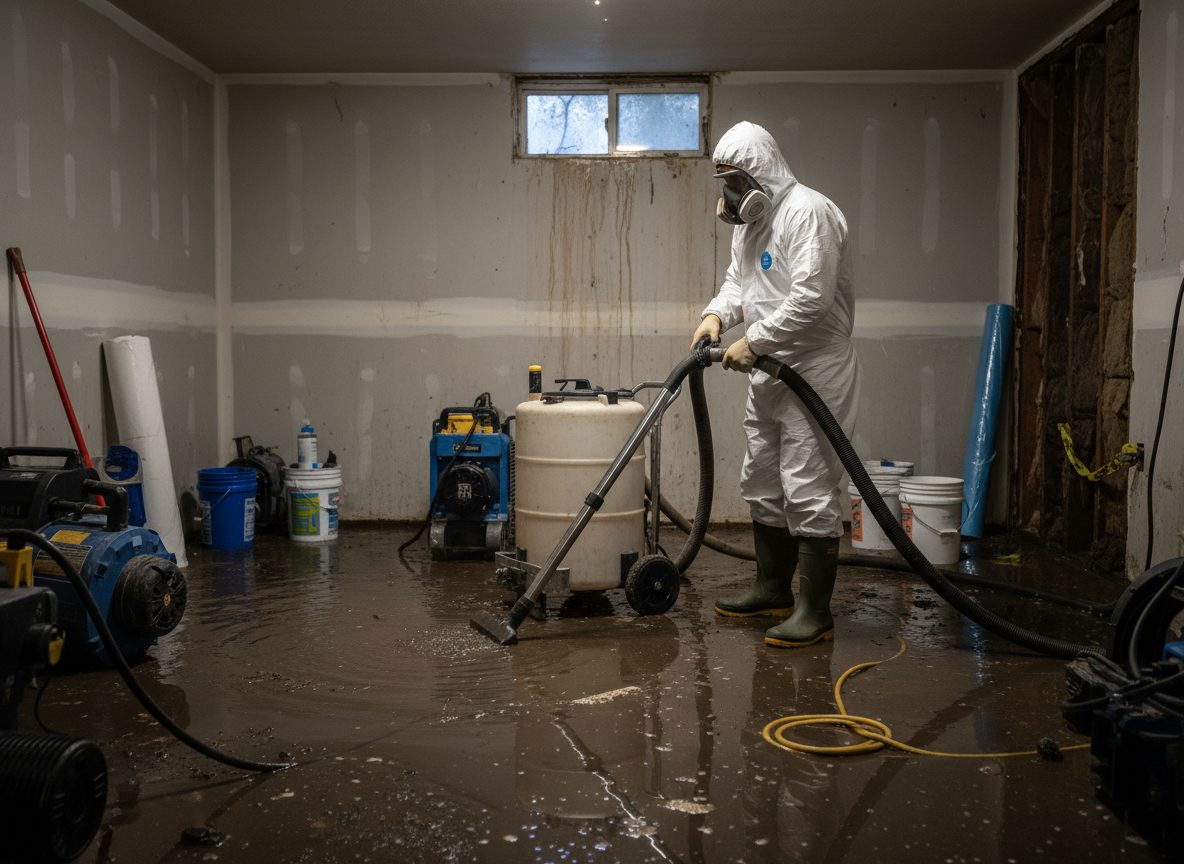
Sewage backups in East Irvine often stem from aging sewer laterals installed during the 1970s and 1980s housing boom along Irvine Boulevard corridors. These cast-iron and clay pipes crack under root intrusion from nearby landscaping and the area's expansive clay soils that shift with seasonal moisture changes. Technicians must first isolate the affected zone, then extract Category 3 water using truck-mounted vacuums while monitoring for structural saturation in slab-on-grade homes common throughout the neighborhood.
Disinfection protocols follow EPA and California health department guidelines for biohazard waste, requiring removal of porous materials like carpet padding and drywall up to the flood line. In East Irvine's single-story ranch homes, hidden contamination frequently travels under cabinets and into HVAC returns, demanding negative-air machines and HEPA filtration to prevent airborne pathogens from spreading to unaffected rooms.
Edge cases include backups triggered by heavy winter rains overwhelming municipal lines near the 5 freeway corridor, where grease buildup from older restaurants combines with storm inflow. Crews document every step with moisture meters and photo logs to support insurance claims, then apply antimicrobial agents rated for porous surfaces before drying begins with commercial air movers and dehumidifiers.
Final verification includes ATP swab testing to confirm bacterial reduction below safe thresholds before homeowners reoccupy. All extracted waste is transported to permitted Orange County facilities rather than local landfills, avoiding cross-contamination risks that arise when crews skip proper manifesting.
Technician insight
In East Irvine, the thing that catches most people out with Sewage Backup Cleanup is how the flat terrain and clay soils let water sit under slabs for weeks after the visible mess is gone. Homeowners often rip out carpet themselves but miss the saturated particleboard subfloor that keeps feeding mold and odors back into the house.
Sewage Backup from Tree Root Intrusion
A homeowner near the intersection of Irvine Blvd and Culver noticed slow drains after a rain event. We traced the issue to roots penetrating an old clay lateral serving a 1982 tract home. Extraction removed several hundred gallons, followed by targeted removal of base cabinets and drying beneath the slab. The property passed clearance testing within five days and avoided secondary mold growth.
How it works
- 1
Site Assessment
Technicians arrive within hours, map the contamination path through East Irvine homes, and test for hidden moisture behind walls and under floors.
- 2
Containment and Extraction
Barriers isolate the area while pumps and vacuums remove standing sewage, preventing further migration into clean zones.
- 3
Removal of Contaminated Materials
Porous items saturated with wastewater are cut out and bagged for proper disposal at licensed Orange County sites.
- 4
Disinfection and Drying
EPA-approved antimicrobials treat surfaces, followed by industrial drying equipment to bring moisture levels back to normal.
- 5
Final Testing and Clearance
ATP testing and visual inspection confirm the space meets safety standards before reconstruction or reoccupancy.
Pricing
Pricing depends on the volume of water, number of affected rooms, and whether structural materials must be removed.