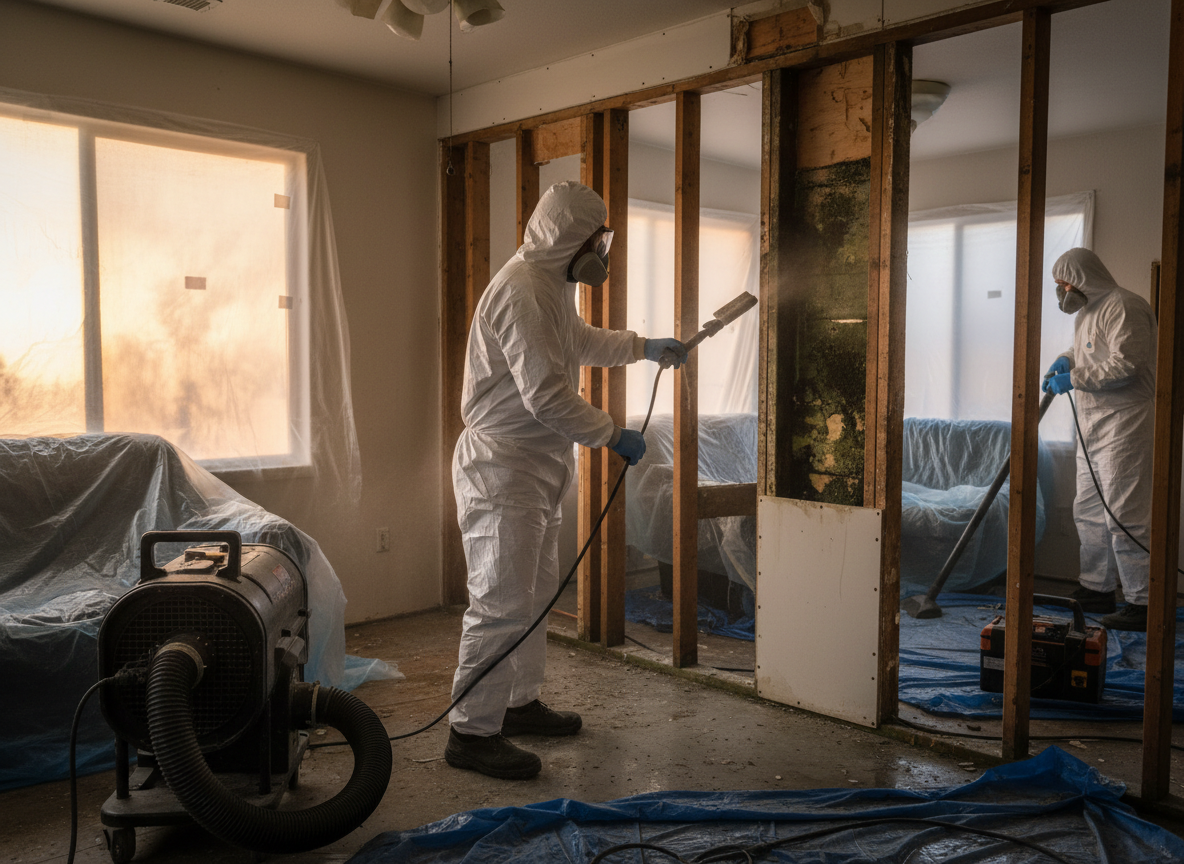
East Irvine homes often feature stucco exteriors and slab foundations that trap moisture after roof leaks or plumbing failures. Remediation starts with infrared moisture mapping to locate hidden saturation behind walls and under flooring without unnecessary demolition. Containment barriers and negative air machines prevent spore spread to unaffected rooms, which is critical in the compact layouts common throughout neighborhoods near the 5 freeway.
Porous materials like drywall and carpet padding in post-1980s East Irvine construction frequently require removal once mold colonies exceed ten square feet. We use HEPA vacuums and antimicrobial rinses on non-porous surfaces while monitoring humidity levels to stay below 50 percent during drying. Orange County building codes require proper disposal of contaminated debris, and we coordinate with local waste facilities to avoid cross-contamination during transport.
Edge cases arise when mold travels through HVAC ducts shared between townhomes or condos near Irvine Boulevard. In these situations we isolate the system, replace affected flex lines, and recommend filter upgrades. Homeowners who attempt DIY bleach cleaning often miss root moisture sources in the soil around flat lots, allowing recurrence within weeks once summer humidity returns.
Seasonal Considerations
Heavy winter rains followed by warmer spring temperatures accelerate mold growth in East Irvine crawl spaces and garages. Scheduling inspections before peak humidity months prevents small colonies from spreading into living areas.
Technician insight
In East Irvine, the thing that catches most people out with Mold Remediation is moisture trapped behind the exterior stucco on 1980s-1990s tract homes; flat lots and minimal grading let irrigation or rain water sit against the foundation long enough to wick upward even when the interior looks dry.
Slab Leak Mold in East Irvine Townhome
A slow slab leak under a kitchen floor allowed black mold to colonize subflooring and travel into adjacent cabinetry. We isolated the unit, removed the affected flooring and base cabinets, treated the concrete, and ran dehumidifiers until readings dropped below 12 percent. Clearance testing passed and the homeowner was able to schedule repairs without further spread.
How it works
- 1
Initial Assessment
Technicians arrive within hours, document visible growth, and use moisture meters plus thermal imaging to trace the full extent of water intrusion in East Irvine structures.
- 2
Containment Setup
Plastic barriers and negative air pressure isolate the work zone so spores do not migrate into clean areas of the home or neighboring units.
- 3
Removal and Cleaning
Affected porous materials are removed, non-porous surfaces are treated with EPA-registered solutions, and HEPA air scrubbing runs continuously until clearance testing.
- 4
Drying and Verification
Dehumidifiers and air movers reduce moisture content below 15 percent, followed by independent lab testing to confirm mold levels meet post-remediation standards.
- 5
Prevention Recommendations
We identify and document the original moisture source so the homeowner can address it before final reconstruction begins.
Pricing
Pricing varies with the square footage affected, accessibility of hidden growth, and whether HVAC cleaning is required.