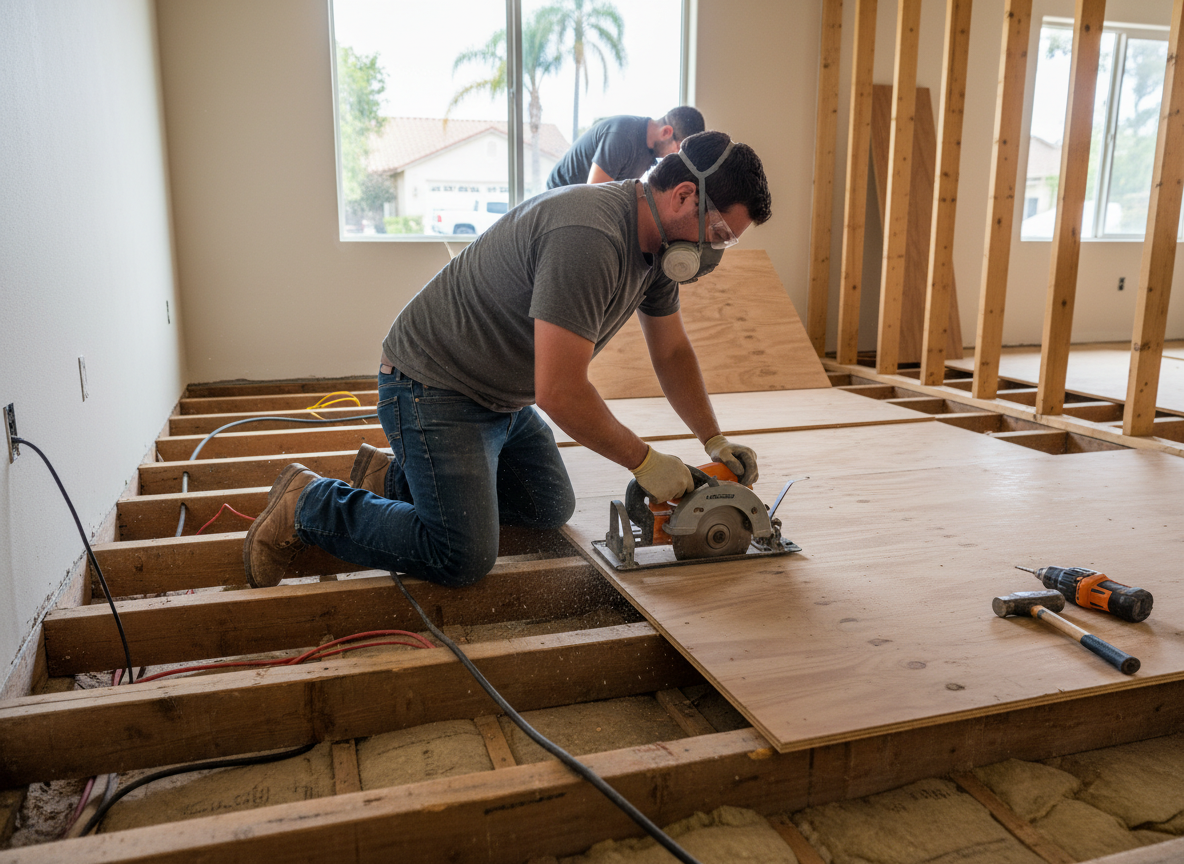
East Irvine homes built in the 1970s through 1990s often feature particleboard or plywood subfloors over concrete slabs or crawl spaces. When plumbing leaks or roof seepage occur, these materials swell and lose strength quickly, especially during winter rains that can drop several inches in a short period. Technicians must cut out affected sections while protecting adjacent flooring and checking for hidden moisture that travels along joists toward exterior walls.
Repair work here frequently involves matching existing joist spacing and installing new plywood rated for the load requirements of local building codes. Edge cases include homes where prior owners covered original subfloors with multiple layers of vinyl or tile, trapping moisture and promoting mold growth beneath cabinets or in laundry rooms. Proper ventilation and moisture barriers become critical because East Irvine's dry summers can mask ongoing issues until the next rain event.
Access challenges arise in attached garages and multi-story townhomes common along Irvine Boulevard, where equipment must navigate tight spaces without disturbing finished surfaces. Crews document every layer removed so insurance adjusters see the full scope, and they replace only the damaged portions rather than entire rooms when possible to keep the project contained.
Final steps include installing new underlayment that meets current fire and moisture standards before any new flooring goes down. Homeowners should expect temporary disruption of kitchen or bathroom use and plan for dust containment measures that prevent particles from migrating into HVAC systems common in these tract homes.
Technician insight
In East Irvine, the thing that catches most people out with Subfloor Repair is how fast particleboard subfloors in 1980s homes swell from a single washing machine leak, especially when the slab has no vapor barrier and winter rains push extra humidity into the crawl space.
Kitchen Leak Under Cabinets
Water from a leaking dishwasher supply line migrated under base cabinets in an East Irvine home. Inspection revealed swollen particleboard extending two feet beyond the visible damage. Crews removed the affected subfloor, dried the joists, and installed new plywood before the homeowner could reinstall flooring.
How it works
- 1
Initial Assessment
Technicians inspect the affected area, measure moisture levels in subfloor and joists, and identify the water source using infrared imaging.
- 2
Containment and Removal
Work zones are isolated, damaged subfloor sections are cut out, and all wet materials are removed to prevent mold spread.
- 3
Drying and Treatment
Industrial drying equipment removes remaining moisture from joists and surrounding areas, followed by antimicrobial application where needed.
- 4
Structural Repair
New plywood is installed to match original specifications, secured to joists, and checked for level before underlayment is added.
- 5
Final Verification
Moisture readings are rechecked and the area is cleared for flooring installation or other trades.
Pricing
Pricing varies with square footage, access difficulty, and whether joist repairs or mold treatment are required.