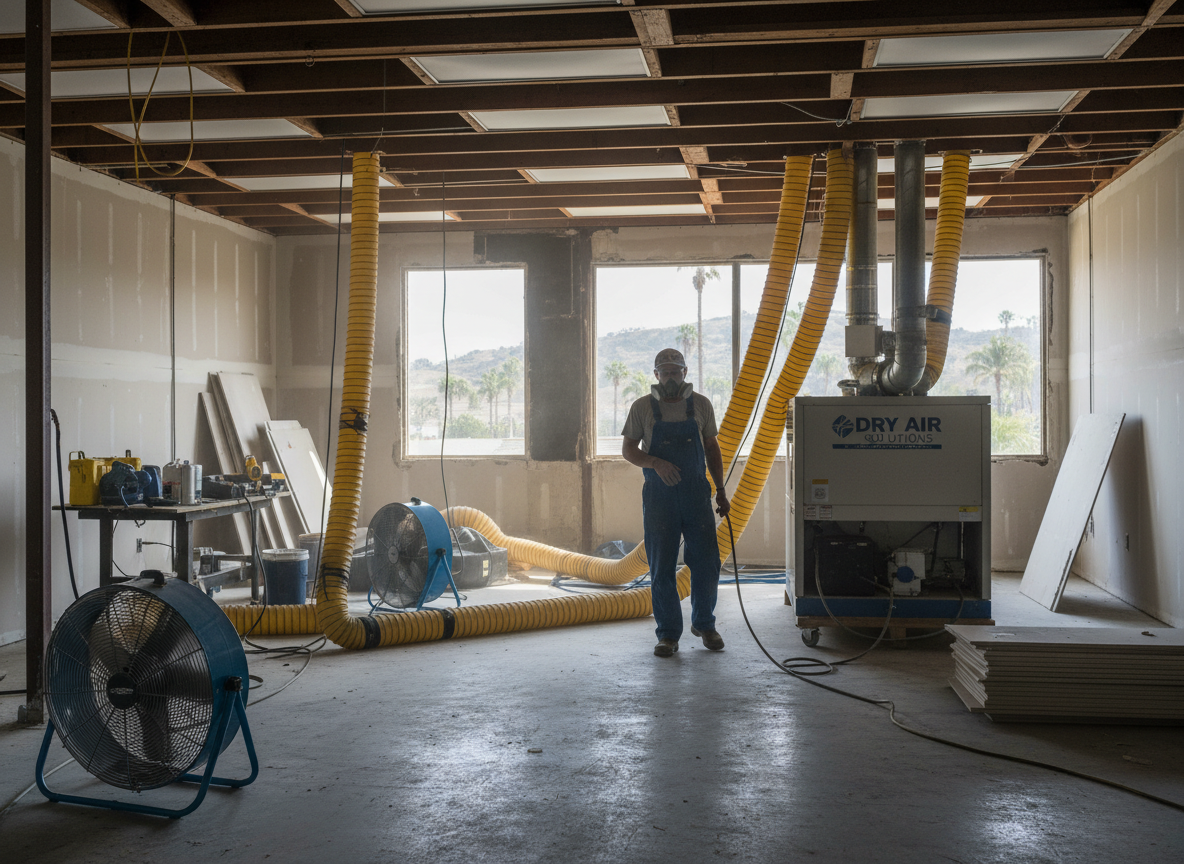
Structural drying in East Irvine homes requires careful assessment of wood framing, drywall, and stucco assemblies common along Irvine Blvd corridors. Older tract homes built in the 1970s and 1980s often have limited vapor barriers, allowing moisture to migrate into cavities after roof leaks or appliance failures. Technicians use moisture meters and thermal imaging to locate saturation behind surfaces before setting up air movers and dehumidifiers sized for the square footage and local humidity levels that persist even in dry months.
Edge cases arise when water reaches concrete slabs or subflooring in East Irvine properties near the foothills. Capillary action can pull moisture upward through porous materials, creating conditions for hidden mold if drying is rushed. Code considerations include ensuring negative air pressure during extraction to avoid spreading particulates into living spaces, and documenting moisture readings at multiple depths to satisfy insurance adjusters who review claims from Orange County properties.
Homeowners sometimes attempt DIY drying with box fans, but this frequently leaves residual moisture in base plates and window casings typical of East Irvine construction. Professional equipment maintains consistent drying gradients while monitoring daily progress to avoid over-drying that can crack wood elements. Seasonal rain patterns in the area mean jobs often involve repeat visits to confirm equilibrium moisture content before reconstruction begins.
Technician insight
In East Irvine, the thing that catches most people out with Structural Drying is how moisture travels along the stucco-to-wood transitions on homes built near Irvine Blvd; a small exterior leak often saturates interior base plates that stay damp long after surface water is gone because the local soil holds residual moisture from winter rains.
Slab Edge Saturation After Appliance Leak
Water from a washing machine leak reached the slab edge in an East Irvine home. We found elevated readings extending two feet into the subfloor. Directed drying with low-profile air movers and daily meter checks removed the trapped moisture over five days without cutting into finished flooring.
How it works
- 1
Initial Assessment
Technicians inspect the affected structure, document visible damage, and map moisture levels using meters and imaging tools.
- 2
Water Extraction
Standing water is removed with pumps and wands to reduce overall saturation before drying equipment is placed.
- 3
Equipment Setup
Industrial air movers, dehumidifiers, and heaters are positioned to create directed airflow and control humidity.
- 4
Daily Monitoring
Readings are taken at regular intervals, equipment adjusted, and progress logged until structural materials reach dry standards.
- 5
Final Verification
Post-drying inspection confirms moisture content and readiness for repairs or reconstruction.
Pricing
Cost depends on affected square footage, depth of saturation, and duration of equipment runtime required.