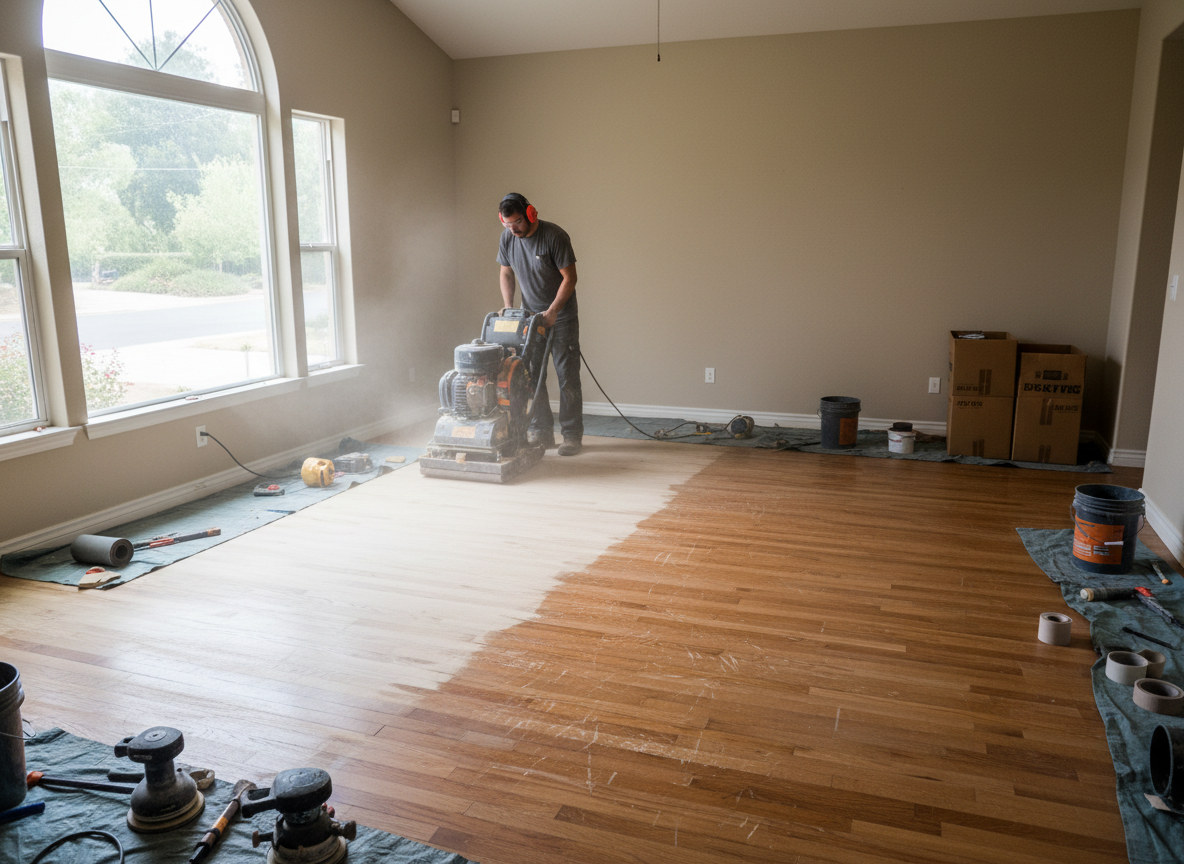
East Irvine homes built from the 1970s onward often feature solid oak or maple flooring installed over concrete slabs or plywood subfloors. When pipes burst or roofs leak during winter rains, water migrates under baseboards and forces boards to cup or separate at the seams. Restoration begins with moisture mapping using pin and pinless meters to locate hidden saturation in the subfloor, followed by targeted drying before any sanding or refinishing can start. Skipping this step leads to recurring mold under the finish within months.
Summer humidity in the Irvine area slows evaporation, so crews run dehumidifiers and air movers for several days even after visible water is gone. Older East Irvine neighborhoods near the 5 freeway have tighter crawl spaces that trap moisture longer than newer tracts, requiring extra attention to edge joints and vented baseboards. Technicians remove only the damaged boards when possible, matching grain and width from local suppliers to avoid visible patches once the floor is sanded and recoated.
Homeowners sometimes attempt DIY drying with box fans, which pushes moisture deeper into the tongue-and-groove joints and creates telegraphing lines after refinishing. Professional extraction with weighted vacuums and infrared drying prevents that outcome. Floors in single-story ranch homes common along Irvine Boulevard are especially vulnerable because slab leaks travel laterally under the entire living area before surfacing.
Seasonal Guidance
Winter storms increase call volume for hardwood restoration along East Irvine’s older streets, while summer heat accelerates cupping if drying is delayed. Technicians schedule follow-up visits 30 days after refinishing to check for any residual moisture that could lift the new finish.
Technician insight
In East Irvine, the thing that catches most people out with Hardwood Floor Restoration is how quickly water travels under the slab in 1970s and 1980s homes near Irvine Boulevard. Homeowners stop the leak and think the floor is dry, but the plywood underlayment stays wet for weeks and the boards cup again after refinishing. We always pull baseboards and check the slab edge first.
Slab Leak Under Oak Flooring
A pipe joint failed under a single-story home off Irvine Boulevard. Water spread beneath the oak boards, causing visible cupping across the living room. Crews extracted moisture, replaced the saturated subfloor section, and sanded and refinished the entire floor to match the original grain. The homeowner avoided full replacement and the floor stayed flat through the next rainy season.
How it works
- 1
Moisture Assessment
Technicians map water migration through the floor and subfloor using meters and infrared imaging at the East Irvine property.
- 2
Water Extraction and Drying
Standing water is removed and industrial drying equipment is placed to bring moisture levels below 12 percent before any sanding begins.
- 3
Board Replacement and Sanding
Damaged planks are cut out and replaced with matching hardwood, then the entire surface is sanded to remove cupping and old finish.
- 4
Refinishing and Protection
Multiple coats of water-based polyurethane are applied, followed by a final walkthrough to confirm even color and sheen.
Pricing
Cost depends on square footage affected, extent of subfloor damage, and whether boards must be replaced. Upfront quotes provided after inspection.