Pipe bursts in East Irvine often trace to aging copper or galvanized lines installed in homes from the 1970s and 1980s near Irvine Blvd. Once a line fails, water migrates under slabs or into wall cavities before surfacing, so restoration crews must trace moisture with meters rather than relying on visible stains. Orange County’s clay-heavy soils slow drainage and keep moisture trapped longer, which raises the risk of mold in subflooring if extraction is incomplete.
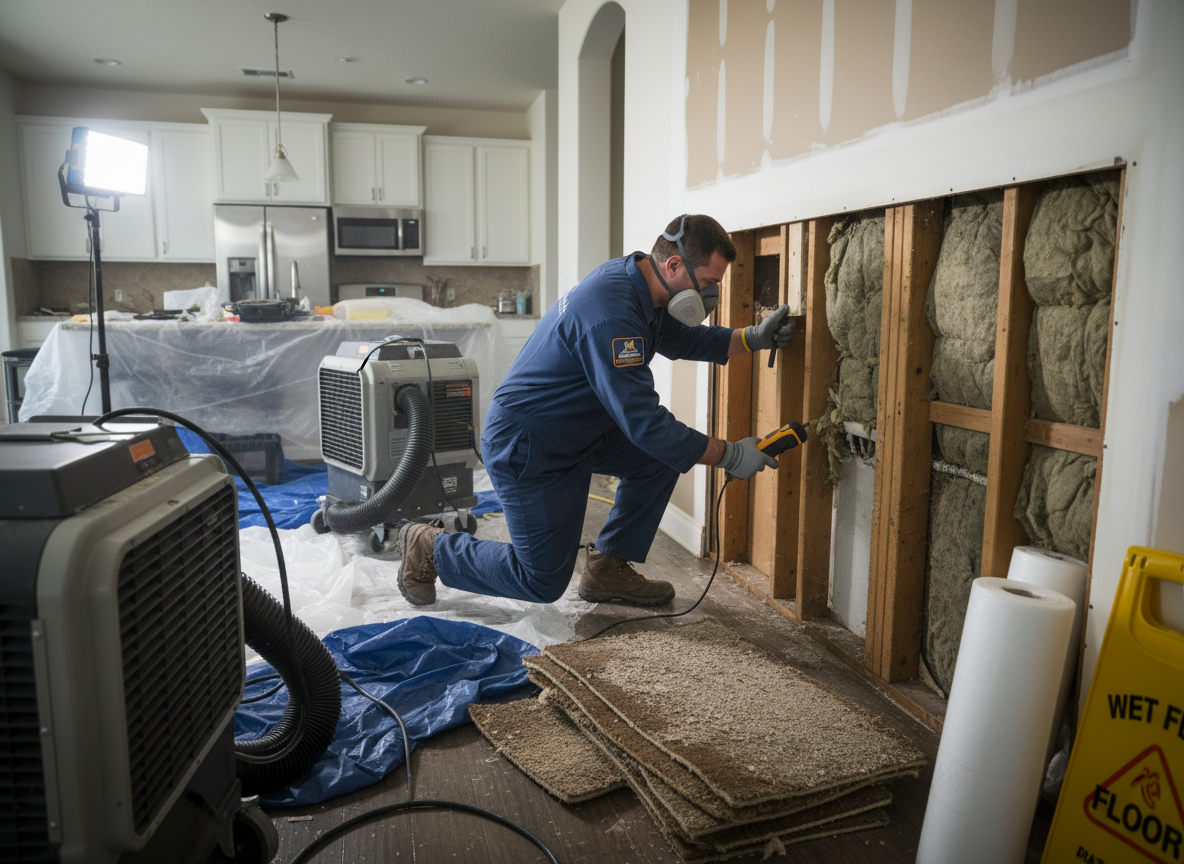
Technicians first isolate the supply, cut out the failed section, and install new PEX or copper with proper hangers to meet current code. They then remove saturated drywall up to the moisture line and deploy air movers and dehumidifiers sized for the square footage. In single-story ranch homes common here, crews frequently work through the slab edge rather than tearing up finished floors, which keeps repair costs lower when the leak is caught early.
Homeowners sometimes attempt to shut off water themselves and then delay professional drying, allowing moisture to wick into base plates and door jambs. That shortcut turns a contained pipe failure into a full-room rebuild. East Irvine properties with original cast-iron drains are especially prone to this because the pipe material corrodes from the inside out and leaks can restart weeks after the first repair.
Final verification uses moisture readings below 12 percent on wood and concrete before any new finishes are installed. Crews also document every step with photos for insurance adjusters who handle claims in this ZIP code.
Technician insight
In East Irvine the thing that catches most people out with Pipe Burst Restoration is the number of 1970s slab-on-grade homes along Irvine Blvd where the original copper runs right under the living room. Once the pipe lets go, water spreads under the slab before it shows on the carpet, so you end up chasing moisture farther than the homeowner expects.
Slab Leak Under Living Room
A homeowner on the east side noticed warm floors and a musty smell. We found a pinhole in the 3/4-inch copper line beneath the slab. After isolating the line and extracting water through perimeter channels, we dried the subfloor for five days and replaced the section with PEX rerouted along the perimeter. Readings stayed under 10 percent before new flooring went down.
How it works
- 1
Emergency Shutoff and Assessment
Arrive on site, locate the main valve, and map the full moisture footprint using thermal imaging and pin meters.
- 2
Water Extraction
Remove standing water from floors and cavities with truck-mounted pumps and portable wands.
- 3
Drying and Monitoring
Place equipment and return daily to adjust settings until all materials reach safe moisture levels.
- 4
Pipe Repair and Finish Restoration
Replace damaged plumbing, reinstall drywall, and match existing textures and paint.
Pricing
Cost depends on access to the leak, square footage affected, and whether slab work is required.