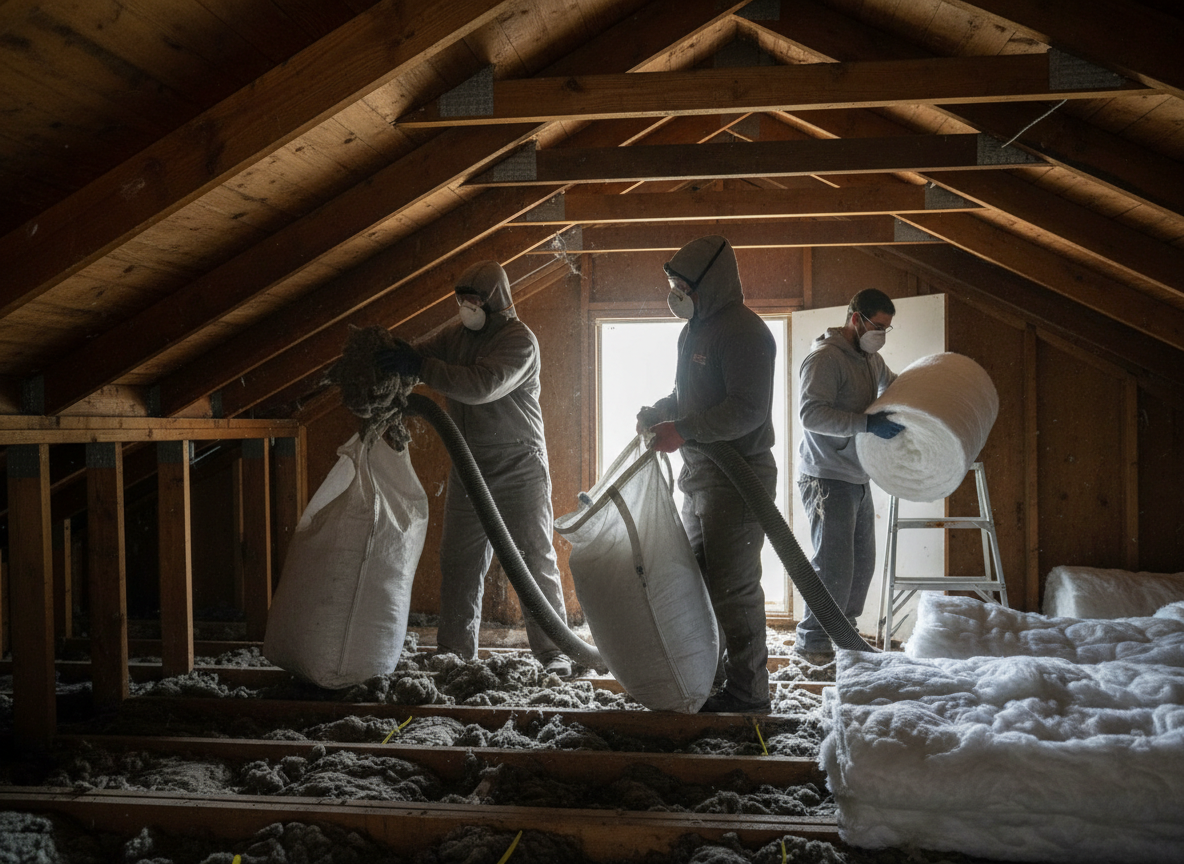
Water intrusion in East Irvine homes often saturates attic and wall insulation, especially in tract housing built along Irvine Blvd and surrounding neighborhoods. Fiberglass batts and blown cellulose hold moisture against framing, creating conditions for mold within 48 hours during the region's winter rains. Removal requires negative air machines and sealed chutes to prevent spores from migrating into living spaces, followed by HEPA vacuuming of cavities before new material is installed.
Older East Irvine properties frequently use kraft-faced insulation that traps vapor when walls get wet from roof leaks or plumbing failures common in homes from the 1970s and 1980s. Technicians must check for hidden saturation behind electrical boxes and HVAC returns, then select replacement products rated for the local climate zone to maintain proper R-value without promoting condensation on cooler evenings. Failure to address these details leaves residual moisture that reappears after the next rain event.
Replacement work must align with Orange County ventilation requirements so that new insulation does not block soffit or ridge vents in single-story ranch homes typical of the area. Technicians also verify that any new material meets fire-blocking standards at party walls in attached garages. Proper sequencing prevents callbacks when summer heat drives remaining moisture toward interior finishes.
Technician insight
In East Irvine, the thing that catches most people out with Insulation Removal and Replacement is how flat lots along Irvine Blvd let winter rain sit against slab edges and seep into perimeter wall cavities of 1970s ranch homes, soaking insulation that never fully dries without full removal.
Attic Insulation Replacement After Roof Leak
A homeowner on the east side of Irvine Blvd reported ceiling discoloration after heavy winter rain. Inspection revealed saturated cellulose filling the attic space above the living room. Wet material was removed under containment, cavities were dried, and new insulation was installed while restoring proper soffit ventilation.
How it works
- 1
Site Assessment
Technicians inspect affected attics and wall cavities from the 6424 Irvine Blvd base, mapping water migration paths common in East Irvine tract homes.
- 2
Containment and Removal
Negative pressure zones are established, wet insulation is extracted through sealed chutes, and debris is removed to prevent cross-contamination in living areas.
- 3
Drying and Verification
Moisture meters confirm framing and sheathing are dry before new insulation is selected for the local climate and installed to code.
- 4
Final Replacement
New insulation is placed with attention to ventilation paths, followed by a walkthrough to confirm no gaps remain in East Irvine homes.
Pricing
Pricing varies by square footage affected, access difficulty in older East Irvine homes, and insulation type.