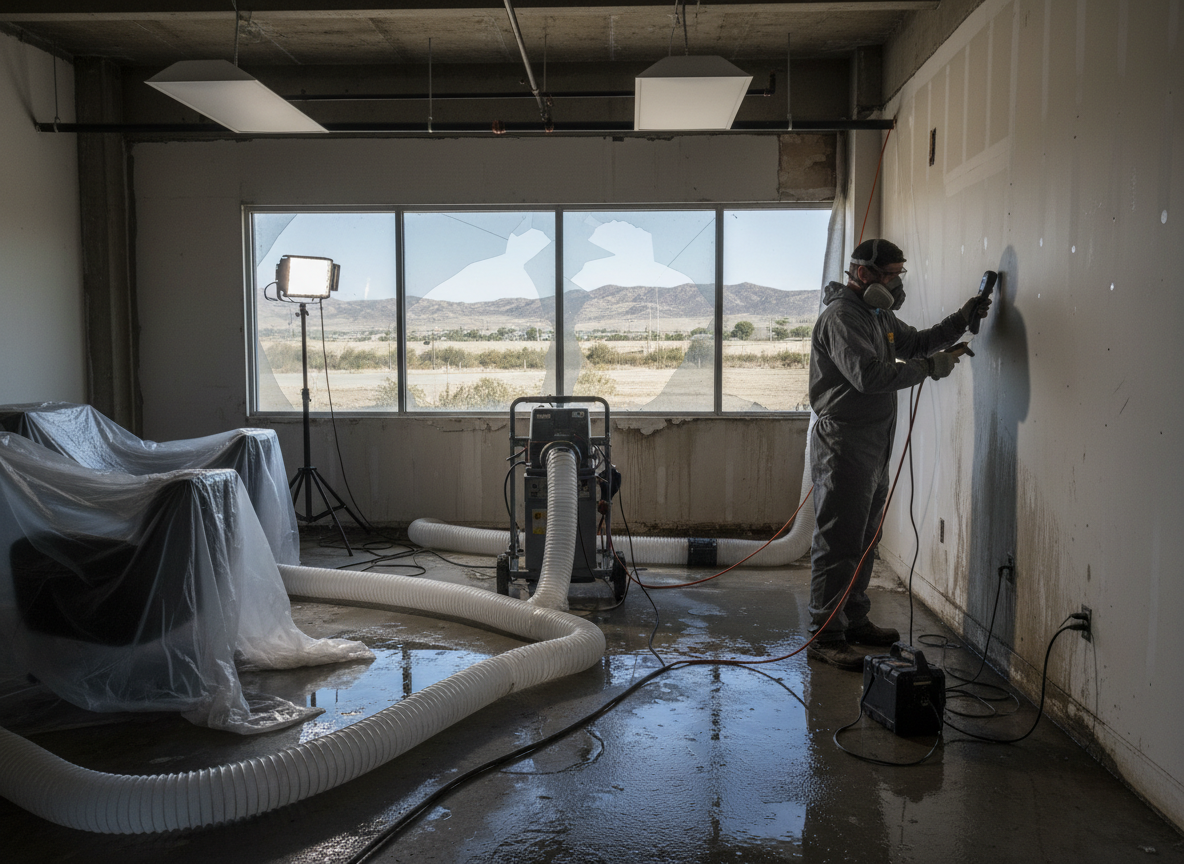
Dehumidification after water damage requires matching equipment to the moisture load and building materials found in East Irvine homes. Refrigerant dehumidifiers handle typical drywall and carpet scenarios, while desiccant units are needed when temperatures drop or when thick concrete slabs in older ranch homes retain water. Technicians place units to create negative pressure that pulls moist air through the equipment rather than allowing it to migrate into unaffected rooms.
East Irvine's flat terrain and proximity to seasonal drainage channels can leave residual moisture under slab foundations and in wall cavities long after visible water is gone. Without proper psychrometric monitoring, relative humidity can rebound and trigger mold on wood framing or insulation. Daily readings of moisture content in affected materials guide when equipment can be safely removed and prevent callbacks.
Homeowners sometimes run portable units purchased at big-box stores and assume the job is finished once surface dampness disappears. These machines lack the airflow and capacity to dry deeper layers in the stucco and wood construction common along Irvine Boulevard. Professional drying logs document conditions and protect against future disputes with insurers over hidden damage.
Technician insight
In East Irvine, the thing that catches most people out with Dehumidification Services is how water sits under the slab in the 1970s and 1980s ranch homes along Irvine Blvd because the flat lots have no slope for drainage.
Hidden Moisture Under Slab
Water from a supply line leak migrated under the concrete slab of a single-story home near the address. Initial surface drying left elevated moisture readings in the subfloor. Targeted dehumidification with low-grain units pulled remaining water vapor through the slab joints over five days, returning readings to acceptable levels without demolition.
How it works
- 1
Initial Assessment
Technicians arrive within hours, map moisture with meters, and identify hidden pockets in walls and under floors.
- 2
Equipment Placement
Air movers and dehumidifiers are positioned to create directed airflow and maintain target humidity levels.
- 3
Daily Monitoring
Readings are recorded each visit to track drying progress and adjust equipment as materials release moisture.
- 4
Final Verification
Moisture levels are confirmed against dry standards before equipment removal and area clearance.
Pricing
Pricing depends on square footage affected, depth of moisture, and duration of equipment runtime.