2026-10-14 ·
Preventing Irrigation Line Breaks That Flood East Irvine Yards and Slabs
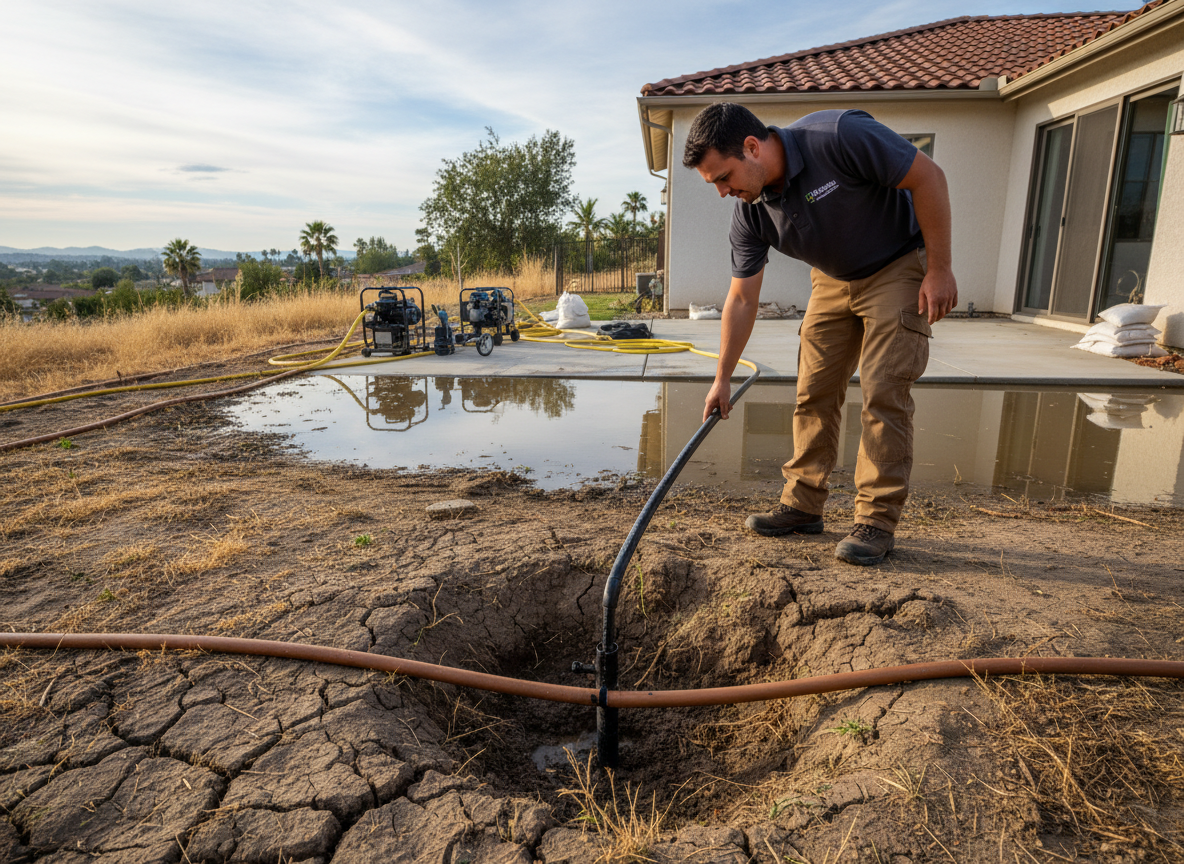
Regular pressure checks combined with root barriers and seasonal shutoffs stop most irrigation line breaks before they flood East Irvine yards or undermine slabs. Homes in neighborhoods such as Woodbury and Cypress Village often sit on expansive clay soils that shift with irrigation cycles, stressing older PVC lines installed 15–20 years ago.
Common Causes of Irrigation Line Breaks in East Irvine
East Irvine yards typically use in-ground PVC or polyethylene lines feeding pop-up heads across front and rear landscapes. Clay-heavy soils common throughout the East Irvine area expand when wet and contract during dry spells, creating movement that cracks joints and fittings. Tree roots from mature ficus and ficus hedges planted near property lines seek moisture and wrap around lines, exerting crushing force over time. High water pressure from municipal supply—often 70–80 psi—pushes older 1-inch mains past their 8–12 year service life, especially where lines run under driveways or pool decks. Slab homes in Stonegate and Portola Springs place return lines close to foundations, so any leak quickly migrates beneath concrete and triggers settlement cracks.
Signs of Failing Lines Before Major Flooding Occurs
Watch for unexplained wet patches that appear in the same spot after each watering cycle, particularly along fence lines or near the street in East Irvine neighborhoods. Grass that stays greener in narrow strips while surrounding turf browns often indicates a subsurface leak saturating the root zone. On slab homes, check interior baseboards for musty odors or slight lifting after heavy irrigation days. Sudden spikes in monthly water bills above $30–$40 without added usage point to hidden loss under yards or patios. Soft spots in concrete near hose bibs or valve boxes signal water undermining the subgrade.
Maintenance Steps That Reduce Break Risk
Schedule a full-system pressure test and visual inspection of valve boxes twice a year, once before summer heat and again after winter rains. Install pressure-reducing valves set to 50–55 psi on the main line feeding the irrigation manifold to cut stress on aging pipes. Add root barriers 18 inches deep along property lines where ficus or eucalyptus trees grow within 10 feet of lines. Replace rubber washers and solenoid diaphragms every 3–5 years during routine service rather than waiting for failure. Winterize by draining lines and blowing them out with compressed air before first frost to prevent expansion damage in exposed sections.
Handling a Break to Limit Slab and Yard Damage
Shut off the irrigation main at the backflow preventer immediately when a break is suspected, then mark the wettest area with flags for later excavation. Avoid running the system again until lines are isolated and repaired. For water that has already reached a slab edge, structural drying prevents moisture from wicking into subfloor materials. Homeowners in Woodbury East who caught leaks early often avoid full slab lifting by extracting water within 24–48 hours. If moisture has traveled under the foundation, water damage inspection locates hidden saturation before mold develops behind baseboards.
Long-Term Protection for East Irvine Properties
When replacing sections, use Schedule 40 PVC with glued joints rated for 150 psi and sleeve any new runs that cross driveways or walkways. Document valve locations and line depths on a simple site map kept in the garage for future reference. Pair these upgrades with annual checks from a local restoration team familiar with East Irvine soil movement. Readers dealing with recent pipe issues may also find value in how hidden moisture is detected behind walls after a pipe burst in East Irvine and typical price ranges for drying water-damaged flooring. Consistent attention to these details keeps yards dry and slabs stable without repeated emergency calls.